Meat, No-Meat…and the Art with Framing

Why would this be relevant to project management??

Photo by Jane Doan on pexels.com

I have been following with interest the debate about a diet with or without meat, listening to the arguments of each side, about sustainability, ethics, cost and health benefits advocated by each side.  Right when I was making up my mind, a new “frame” came into the discussion –  the “cultivated meat”. This is animal tissue produced by culturing animal cells in vitro, using engineering techniques.

The debate has intensified and at times it borders on irrationality.  This is not surprising, in these days when views are extremely polarised and we are ruled by the crazy dynamics of social media. And, what is more, Italy has now moved forward a ban on lab-grown meat!  What is going on?  I must say, I am now confused about my options.


I think this situation offers an interesting opportunity for a reflection over the “framing” of arguments,  when those involved in a discussion are arguing for their own proposition, encouraging their own interpretation, discouraging that of the counterpart, using reasons and data to support their own view and to discredit or discourage the one put forward by the others’.

I researched the subject and found a relevance to project management profession.  This led to this short series: an article about the definitions, an article about boundaries and limitations, then one about framing in projects and finally one about some tools that can be used for better framing in project management. Hope you enjoy the series (as I did in writing it) and find some good references for your work.

Marco Bottacini, Senior Portfolio Manager at GALVmed

The views and opinions expressed in this blog are those of the author and do not necessarily reflect the views and opinion of GALVmed.

The Illusion of Control

Photo by Pixabay from pexels.com

There has been a great deal of expectation over the UK’s first-ever space mission which, on the night of the 9th January, was due to place nine satellites in orbit via the company’s LauncherOne rocket. Sadly, the mission failed after an “anomaly” that prevented the Virgin Orbit rocket from reaching orbit. Surely, over the next weeks and months more details will be disclosed as the project team will have to go through a thorough and detailed “post-mortem” review of the failed project. I also learned that the Virgin Orbit was not alone in its failure. Recently, on the 20th December 2022, an Italian-built Vega-C rocket failed after it lifted off from French Guiana. So “space is really hard!”

This news prompted me to reflect over a general subject that is very close to me, the “illusion of control“.

Over the last few decades we got better in many aspects that are critical for successful project management. We have greater access to data, a greater ability for data analysis, we engineer better, we have more powerful analytical and prediction tools, we have a far greater appreciation of complexity, we understand better psychology and human biases. All these improvements led to a more effective decision-making.

But are we better at controlling projects??

The three articles are now available in the Page section of the blog:


Marco Bottacini, Senior Portfolio Manager at GALVmed

The views and opinions expressed in this blog are those of the author and do not necessarily reflect the views and opinion of GALVmed.

Theory, Model or Framework?

Photo by DS stories on pexels.com

A long time ago my job was in pharmacokinetics, the branch of pharmacology dedicated to determining the fate of substances administered to a living organism. In addition to principles of physiology, at its core pharmacokinetics has also a strong mathematical basis and this latter part always fascinated me. I spent a lot of time dealing with pharmacokinetics and pharmacological “models”. Decades later, that modelling has long gone (sigh!), but I still deal with “models”, of completely different nature.

Those who get into the project management profession will have on their desks not only “models“, but maybe also “theories” and many “frameworks“.  I thought it was going to be interesting to talk about these terms in a short series of articles and see if I could pin down some useful principles.  The problem with the definitions of these terms lies in the fact that these terms apply differently depending on field, sector and industry.  The terms have also evolved over time and in some fields they are often used interchangeably. 

I am personally comfortable with the following definitions:

A ‘theory’ is  a system of ideas intended to explain something, especially one based on general principles independent of the thing to be explained.  

A ‘model’ is a representation for the operations, mechanisms, processes or structure of something.

A ‘framework’ is a way of describing and representing the empirical relations between every aspect of the operation, mechanism, process or subject that it is being studied or analysed.

I hope this new series of articles could be of help, especially to those who are approaching the PM profession in the early days of their career, to help them to distinguish between the terms, to appreciate their importance and to use them appropriately. And if there are expert professionals reading this series, well… I would love to get their feedback and their critique!

The article on Theories is now available, as the ones on Models and on Frameworks.


Marco Bottacini, Senior Portfolio Manager at GALVmed

The views and opinions expressed in this blog are those of the author and do not necessarily reflect the views and opinion of GALVmed.

Fix the Six ….

Photo by energepic.com on Pexels.com

Project management is all about decision-making, whether it is in the decision about how to define or limit the project scope, to define its foundation, how to schedule it, how to budget its activities, how to change it, and also if we have .. to stop or continue it. So it is logical that the research investigating the process of human thinking, and how human cognition works in relation to decision-making, has a relevance to project management and to how the latter should be organised.

A cognitive bias is a subconscious error in thinking that leads to misinterpreting information from the world around and affects the rationality and accuracy of decisions and judgments. Biases are unconscious and automatic processes designed to make decision-making quicker and more efficient.

I read with interest the book by Daniel Kahneman on the subject of cognitive biases. I have since spent some time reading additional material covering this subject and tried to contextualise cognitive biases into the practices of project management. I guess it was ultimately to check … how biassed I was!

On this blog I wrote a short article about my understanding and my findings. But, why this title?? Well…. you have to read the article to understand. Happy reading!


Marco Bottacini, Senior Portfolio Manager at GALVmed

The views and opinions expressed in this blog are those of the author and do not necessarily reflect the views and opinion of GALVmed.

New Trends in Project Management

In 2019, at the time when we launched the PMDG, we aimed to work on a frame for project management, centred on three domains, 3Ps (People, Process and Plan). These domains encompass subjects and topics that we thought were relevant to the profession and provided a simple structure for further research and discussion. We wanted to develop them via the work of the group.

Photo by Mikhail Nilov from Pexels

Three years later, I think that the times are ready for taking stock of the observations and learnings, with an opportunity for looking ahead, challenging ourselves with the questions about the future of the profession. COVID has been only one of the disruptive events, certainly the most unpredictable and tragic one. However, there were other forces and trends that were already pushing for change or accelerating the evolution of the profession. I undertook a short research about the future of the profession.

The research is probably not exhaustive, but I found very interesting articles and posts about job disruptors, innovation, trends and revolutionary technologies which could have an important impact on the project management profession.

Project management & the VUCA world

You don’t predict the future. You imagine it.

Charlie Jane Anders

I wrote about the VUCA world in another post. The acronym is related to a concept originated in the 90s with students at the U.S. Army War College to describe the Volatility, Uncertainty, Complexity and Ambiguity of the world after the Cold War. These attributes are describing our world, so prone to change. The VUCA concept has gained considerable relevance in the business and academic press to characterize the current environment where businesses and organisations operate.

The project management profession will too be subject to these challenges. We may struggle to predict how the future of the profession will be, but we can certainly … imagine it.

The “3Ps” model is the simple frame we adopted in 2019 to guide us in the discussion on the blog. Key aspects of the project management profession can be grouped under the three domains, People, Process and Plan:

The “3Ps” Domains by Marco Bottacini

In my research, I have looked at many web sources and specialised insights and tried to consolidate the predictions (speculations?) about the future of the profession, under each of the three domains. The subjects are not presented in a perceived order of importance. The forces for innovation are related to:

  • Soft skills, EQ & culture
  • Stakeholders engagement
  • Change management
  • Automation & analytics
  • Personal learnings & professional development
  • Link to organisations’ strategy
  • Threats & opportunities management & project complexity
  • Organisational performance and impact assessment
  • Knowledge management & organisational learning
  • Evolution with project management frameworks.

My analysis might be far from being comprehensive and maybe lacking in sound scientific evidence, but I hope it will be interesting and thought-provoking. I am only …. imagining the future!

I decided to split the review article in three parts, one for each of the domains. Here is the link to the first article (PEOPLE), the second article (PROCESS) and the third one (PLAN). Hope they are of interest to you…


Marco Bottacini, Senior Portfolio Manager at GALVmed

The views and opinions expressed in this blog are those of the author and do not necessarily reflect the views and opinion of GALVmed.

Excel for PM: Data Analysis & Automation

Photo by Lorenzo on Pexels.com

In this series of articles I would like to explore how Excel can assist in the project management profession, looking at fundamental features, but also at those which might be less known, sharing my view, my findings and experience. This has been a useful exercise for me to reacquaint with Excel.

This is the fourth and final article, dedicated to Data Analysis and Automation (link).

Are you an Excel fan or a detractor? I will be happy to receive comments and constructive feedback (especially from those with good Excel knowledge!).


Marco Bottacini, Senior Portfolio Manager at GALVmed

The views and opinions expressed in this blog are those of the author and do not necessarily reflect the views and opinion of GALVmed.

Excel for PM: Graphs & Charts

In this series of articles I would like to explore how Excel can assist in the project management profession, looking at fundamental features, but also at those which might be less known, sharing my view, my findings and experience. This has been a useful exercise for me to reacquaint with Excel.

This is the third article, dedicated to Graphs & Charts (link).

Are you an Excel fan or a detractor? I will be happy to receive comments and constructive feedback (especially from those with good Excel knowledge!).


Marco Bottacini, Senior Portfolio Manager at GALVmed

The views and opinions expressed in this blog are those of the author and do not necessarily reflect the views and opinion of GALVmed.

Excel for PM: Formulas

Adapted from JESHOOTS.com (Pexels)

In this series of articles I would like to explore how Excel can assist in the project management profession, looking at fundamental features, but also at those which might be less known, sharing my view, my findings and experience. This has been a useful exercise for me to reacquaint with Excel.

This is the second article, dedicated to Formulas (link).

Are you an Excel fan or a detractor? I will be happy to receive comments and constructive feedback (especially from those with good Excel knowledge!).


Marco Bottacini, Senior Portfolio Manager at GALVmed

The views and opinions expressed in this blog are those of the author and do not necessarily reflect the views and opinion of GALVmed.

Excel for PM: Spreadsheet & Tables

Photo by Pixabay on Pexels.com

In this series of articles I would like to explore how Excel can assist in the project management profession, looking at fundamental features, but also at those which might be less known, sharing my view, my findings and experience. This has been a useful exercise for me to reacquaint with Excel.

This is the first article, dedicated to Spreadsheet and Tables (link).

Are you an Excel fan or a detractor? I will be happy to receive comments and constructive feedback, especially from those with good Excel knowledge!


Marco Bottacini, Senior Portfolio Manager at GALVmed

The views and opinions expressed in this blog are those of the author and do not necessarily reflect the views and opinion of GALVmed.
New Series: Excel for Project Management

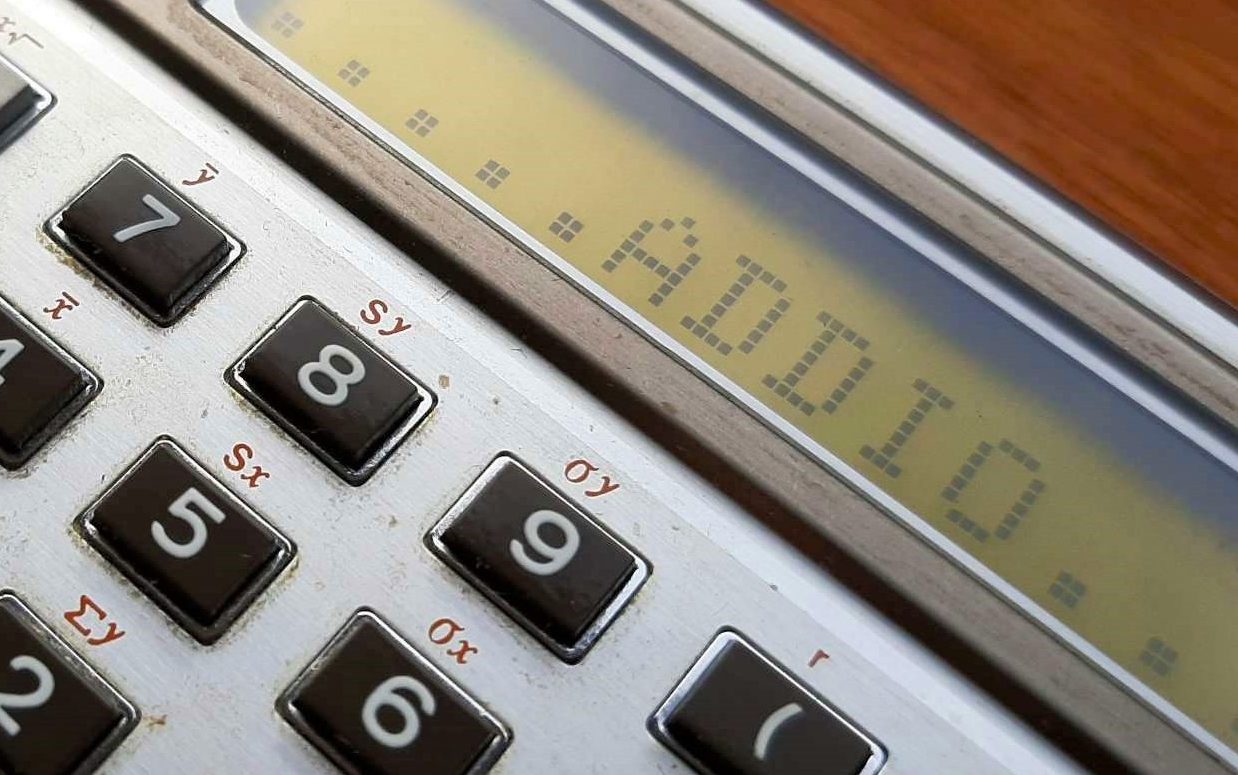
Photo by Marco Bottacini

I remember when, in my first workplace, new computers (running the freshly launched Windows) were distributed to the staff, replacing old HP-150s running only MS-DOS. And I think I also remember when we started using Excel, in late 1988. It was the beginning of the end for my old, second-hand SHARP EL-5100 calculator.

Whether you like it or not, Excel comes onto your desks for many purposes, whether for a simple data tabulation or for a more sophisticated data analysis. It can be your friend, but also your foe. Personally, after so many years of use, I am still struggling with it for a variety of reasons, such as lack of discipline with the learning, change of needs in the job and my attention directed to other more specialised applications.

In a series of articles I would like to explore how Excel can assist in the project management profession, looking at fundamental features, but also at those which might be less known, sharing my view, my findings and experience. This has been a useful exercise for me to reacquaint with Excel.

I have four articles in the series:

  1. Spreadsheet and Tables
  2. Formulas
  3. Charts
  4. Data Analysis and Automation.

Are you an Excel lover or hater? I hope the series will be of interest and, as usual, I will be happy to receive comments and constructive feedback (especially from those with good Excel knowledge!).


Marco Bottacini, Senior Portfolio Manager at GALVmed

The views and opinions expressed in this blog are those of the author and do not necessarily reflect the views and opinion of GALVmed.

Design a site like this with WordPress.com
Get started